
Almost done with this module :) I studied two more phylums in this module. These were: Phylum Echinodermata, and Phylum Chordata (I didn't study all of the last phylum).
Phylum Echinodermata contains sea stars, brittle stars, sea urchins, sea cucumbers, sea lilies, and like creatures. Echinoderms are bilaterally symmetric. Although echinoderms lack eyes and brains, they are complex organisms. They have a complete digestive tract, and their skeleton is actually an endoskeleton, developing from the internal tissues of the animal. They have an internal water vascular system which is a network of water-filled canals used for locomotion and feeding. The canals operate tube feet that are on the bottom of the echinoderms; they extend for locomotion as well as sensory, respiratory and excretory duties. Sea stars have, on the bottom of each arm, a channel called an ambulacral groove; the tube feet protrude through this. Most sea stars are carnivorous and prey on snails, barnacles, and bivalves. It's very interesting and cool how a sea star eats a clam: the sea star goes over the clam and finds the tiniest opening in the clam. It then pushes its stomach out of its body and through that opening, and digests the clam without having to eat it. Sea stars are in class asteroidea, brittle stars are in class Ophiuroidea, class Echinoidea contains sea urchins, sea biscuits, and sand dollars, class holothuroidea contains sea cucumbers, and class crinoidea contains feather stars and sea lilies. Echinoderms' body cavity is filled with a coelomic fluid that transports nutrients and gases throughout their bodies. Echinoderms can also regenerate their body parts. For example, fishers who caught clam saw that sea stars were eating a lot of them, so they caught a bunch of sea stars and cut them up and threw them back in. However, the sea stars all regenerated their entire bodies from the parts that the fishers through in, so there were even more sea stars than before.
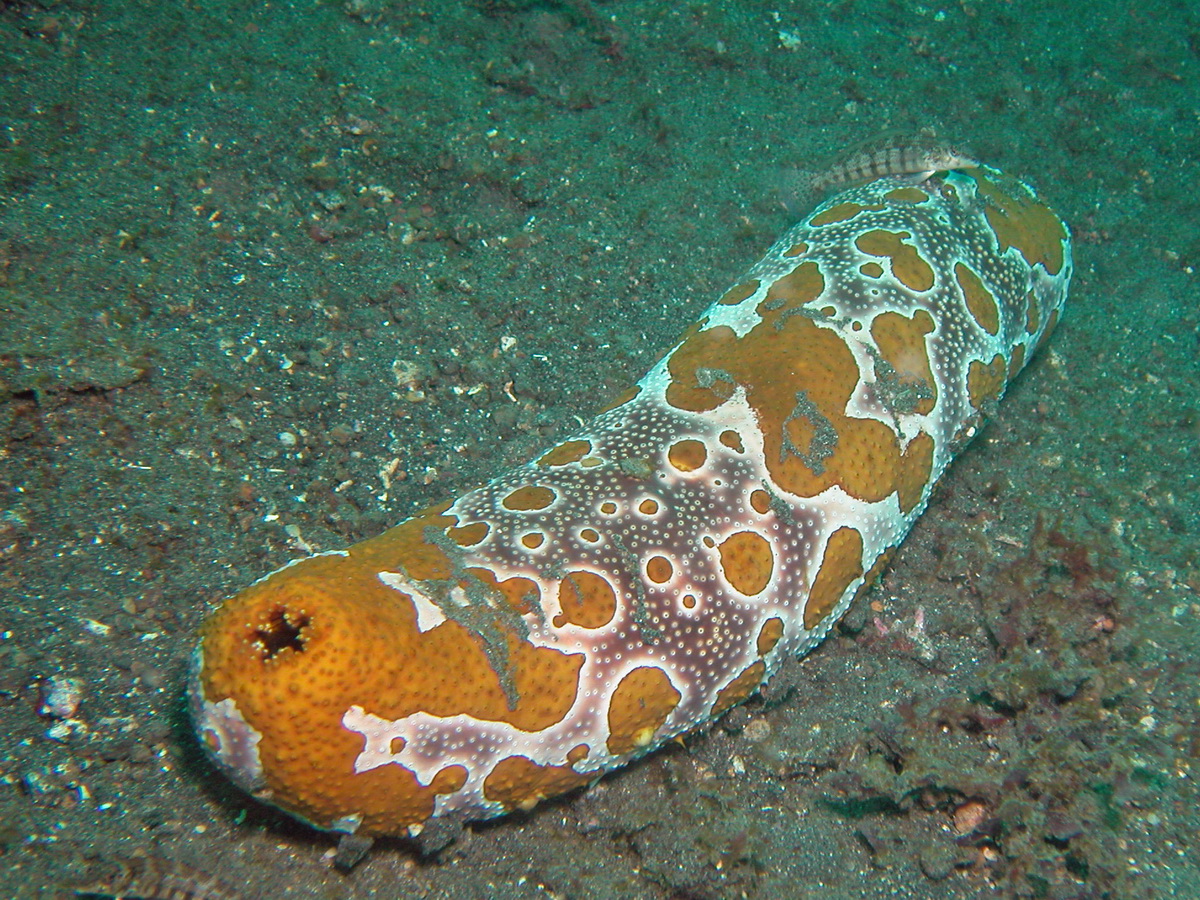
Here are some echinoderm pictures:
Sea cucumber:
Sea urchin:

Sea star:

The last phylum I studied in this module was Phylum Chordata, although I didn't study all of it. This phylum is a diverse group, ranging from tiny gelatinous zooplankton to large fishes and whales. There are both vertebrates and invertebrates in this phylum. However, they all have several things in common: a notochord during some part of their life cycle, which is a flexible supportive rod that runs the length of the body, a hollow dorsal nerve cord that runs along the dorsal length of the animal. They also all have folds of skin located along the neck during their embryonic development. These are called pharyngeal pouches. Subphylum Urochordata is all invertebrates and marine, and its members are called tunicates. As adults, these animals cover themselves with a leather-like "tunic." Sea squirts and scidians are in this subphylum. They filter the water for food by taking it into their mouth through a siphon and passing it through a ciliated sac. During their larval stages, sea squirts swim around, then attach themselves to the bottom of the ocean floor. Subphylum Cephalochordata contains lancelets. They are shaped much like fish. They are usually about the size of a quarter or a bit larger. Pictures:
Sea squirts:

I couldn't find any pictures of lancelets though. Sorry :(

3 comments:
Starfish eat in a really cool way! :)
Stupendous Man,
Aren't sea squirts pretty and strange things? And those sea cucumbers...Did you remember that they can regurgitate their organs and leave them behind in a quick escape from a predatory threat? I guess the idea is the predator will be distracted by that behavior and let the creature get away. They grow their organs back after awhile. Are the predators supposed to be grossed out and run away or do they eat the organs? I suppose it depends. Must be rather stressful to disembowel oneself.... Thanks for the neat pictures and the information. It looks like you're getting some good practice with those interesting words.
-Arwen
What does a sea lily look like? I've never heard of that before. Great pictures again. I always thought it was rather ironic that people tried to get rid of starfishes by cutting them up. God sure has a strange and beautiful creation....
Post a Comment